What Is Plastic Injection Molding?
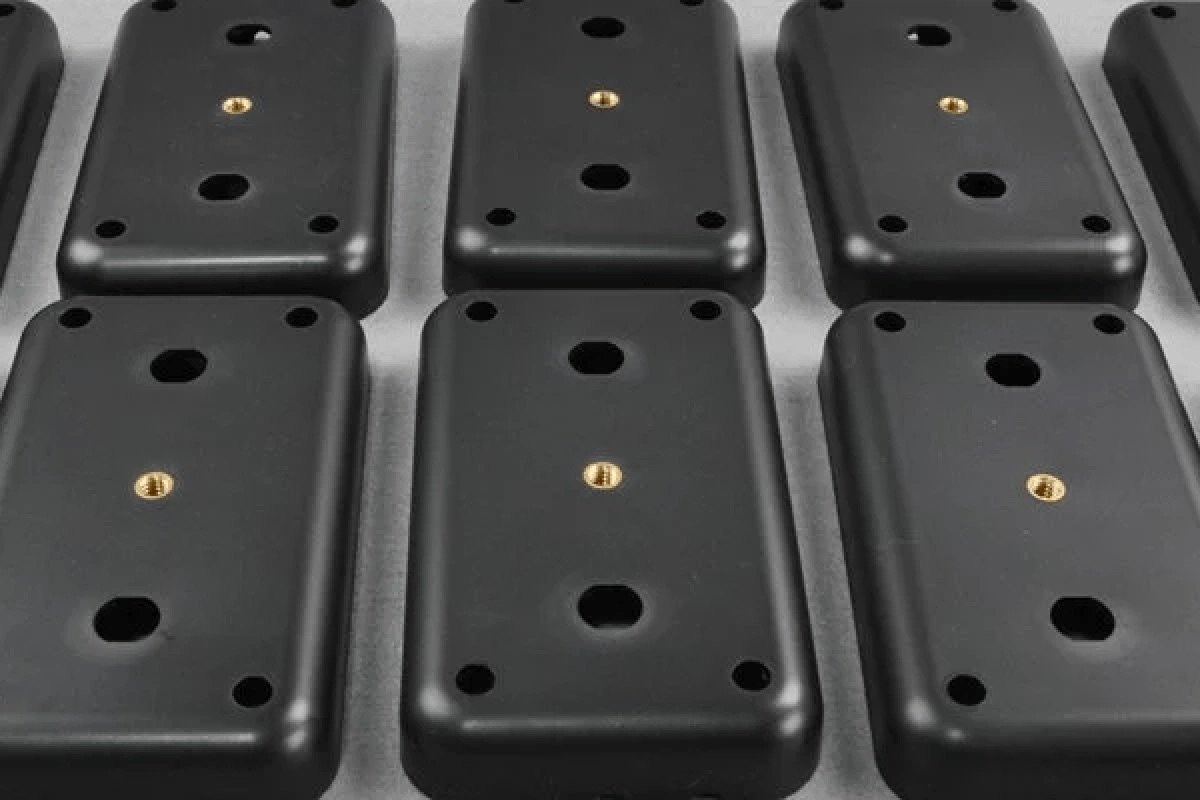
Plastic injection molding is a manufacturing process in which molten thermoplastic resin is injected into a precisely machined metal mold. Once cooled, the resin solidifies into a finished plastic component.
This process is widely favored for producing high volumes of plastic parts due to its low per-unit cost, minimal material waste, and exceptional repeatability. It is particularly well-suited for industries such as medical devices, consumer electronics, and automotive components.
At Goldwin, we deliver custom injection-molded prototypes and production-ready parts with lead times as fast as one day. We utilize high-quality aluminum tooling to offer cost-effective solutions and rapid cycle times. Our inventory includes approximately 200 different thermoplastic resins to accommodate a broad range of material requirements.
Common Use Cases for Plastic Injection Molding:
- Low-volume production
- Bridge tooling
- Pilot production runs
- Functional prototypes and testing
Quality Assurance and Finishing Capabilities for Custom Molded Parts
To ensure your parts meet performance and aesthetic expectations, we offer a comprehensive range of quality inspection services and finishing options as part of our quoting process.
Available Quality Inspection Options:
- Design for Manufacturability (DFM) analysis
- Scientific molding process development reports
- In-process CMM (Coordinate Measuring Machine) inspection and real-time machine monitoring
- First Article Inspection (FAI) reports and process capability studies with GD&T
Post-Processing and Finishing Options:
- Mold texturing (Mold-Tech surface finishes)
- Installation of threaded inserts
- Pad printing for labeling and graphics
How Plastic Injection Molding Works
The injection molding process involves several carefully controlled steps. Before production begins, we collaborate with you to review your design through a DFM analysis, ensuring that your part is optimized for manufacturability and performance.
Our production process follows scientific molding principles to ensure consistency and quality. We use advanced monitoring tools and measurement technologies to validate critical-to-quality (CTQ) dimensions identified in your part design.
Overview of the Injection Molding Process:
- Material Preparation: Resin pellets are loaded into a barrel where they are melted, compressed, and prepared for injection.
- Injection: The molten resin is injected through the runner system into the mold cavity via gates.
- Cooling & Solidification: The part cools and solidifies within the mold.
- Ejection: Ejector pins release the part, which is collected in a loading bin.
- Quality Assurance: Automated inline CMMs perform dimensional inspections in real time. A detailed FAI and process capability report is generated without delaying production.
- Packaging & Delivery: Once approved, parts or initial samples are packaged and shipped promptly.
Our thermoplastic injection molding process uses aluminum molds without integrated heating or cooling channels, resulting in slightly longer cycle times. However, each phase of the molding process—fill speed, hold pressure, and hold time—is independently optimized and continuously monitored to maintain exceptional part quality and visual consistency.
Work With Goldwin – Your Trusted Partner in Mold Making and Plastic Injection
At Goldwin, we specialize in precision mold making and high-quality plastic injection molding services. Whether you need functional prototypes, low-volume runs, or full-scale production, we’re equipped to deliver exceptional results—on time and within budget.
Let’s turn your ideas into production-ready parts.
📞 Contact us today to get started with a free quote.
🛠️ Goldwin – Precision in Every Mold. Excellence in Every Part.